
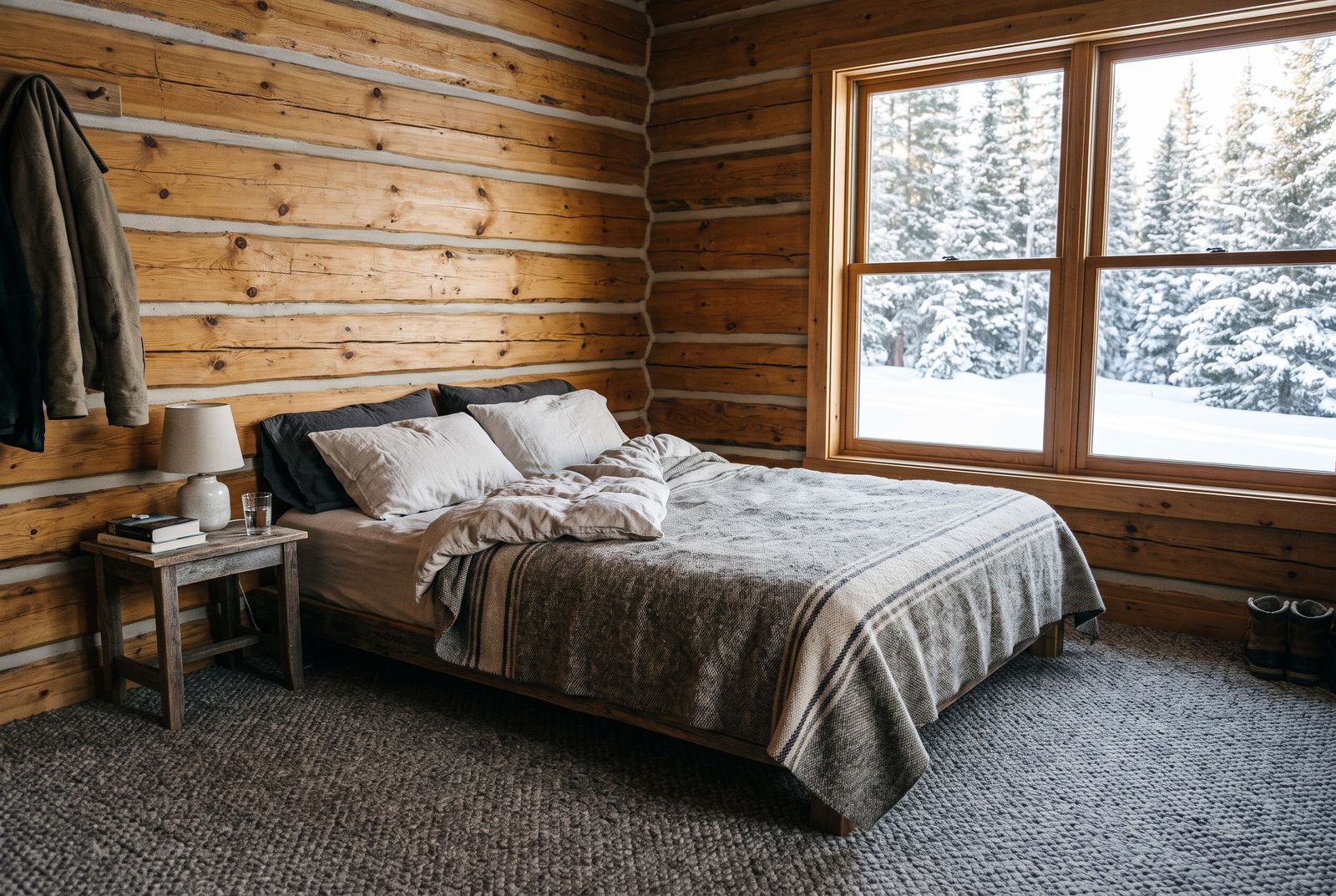
What changes when the house is up high
The carpet itself does not care about elevation. Everything around it does: the sun, the heating, the way the house is used, and how hard it is to get a crew and a roll of carpet to the door.
Mountain properties in Colorado run the full range, from a ski condo used twenty weekends a year to a full-time home on a dirt road. The questions below apply to most of them. Read the ones that fit your place and skip the rest.
Sun at altitude, and the rooms that fade first
With less atmosphere to filter it, ultraviolet light is stronger at elevation. The World Health Organization estimates UV levels climb roughly 10 percent for every 1,000 meters of altitude. Snow on the ground reflects even more of it, and mountain homes are often designed around big windows to catch the view.
| Room setup | Fading load | What helps |
|---|---|---|
| Floor-to-ceiling glass facing south or west | Heaviest | Solution-dyed fiber, UV-filtering film, shades on a timer |
| Loft or bedroom with skylights | Heavy in patches | Mid-tone color so uneven fading reads less; rotate rugs and furniture |
| North-facing rooms | Light | Most fibers are fine; choose for traffic |
| Rooms with snow-covered decks outside the glass | Higher than you'd guess | Treat like a south room even if it faces east |
Fading is often uneven: a bright rectangle under the window, a darker strip under the sofa. Moving furniture a little each season keeps the difference from becoming a permanent outline.
Radiant floor heat: check the limit before you shop
Many mountain homes heat through the floor. Carpet and pad act as insulation on top of that system, so too much of either can keep heat from reaching the room. Heating system makers usually publish a maximum thermal resistance (R-value) for floor coverings. The carpet plus the pad together has to stay under that number.
- Get the R-value limit from the radiant system's documentation or installer.
- Ask the carpet seller for the R-value of the carpet and of the proposed pad. Thinner, denser carpet usually rates lower.
- Some pads are made specifically for radiant floors. A glue-down installation with no pad is another option in some rooms.
- Check the carpet maker's guidance on maximum floor surface temperature.
Wool is a good insulator, which is great in a drafty cabin and less great over a radiant slab. If you want wool over radiant heat, run the R-value numbers first.
Empty weeks, setback temperatures and the water risk
Second homes are often left at a low thermostat setting between visits. Carpet tolerates that fine. What it does not tolerate is water. A frozen and split pipe in an empty house can run for days before anyone notices, and soaked carpet and pad sitting that long usually have to be replaced, not dried.
Protect the floor by protecting the plumbing. Keep the setback temperature at or above what your plumber and insurance carrier recommend, and consider a water leak sensor or an automatic shutoff valve that alerts your phone. A trusted neighbor or property manager checking the house after a cold snap is cheap insurance.
Rentals and second homes: plan for many guests
A short-term rental gets more traffic in a season than some homes see in years, from people who do not know the house and may not take their boots off. Plan for that honestly.
- Choose a resilient fiber (nylon or triexta) in a textured or frieze cut pile and a mid-tone, flecked color.
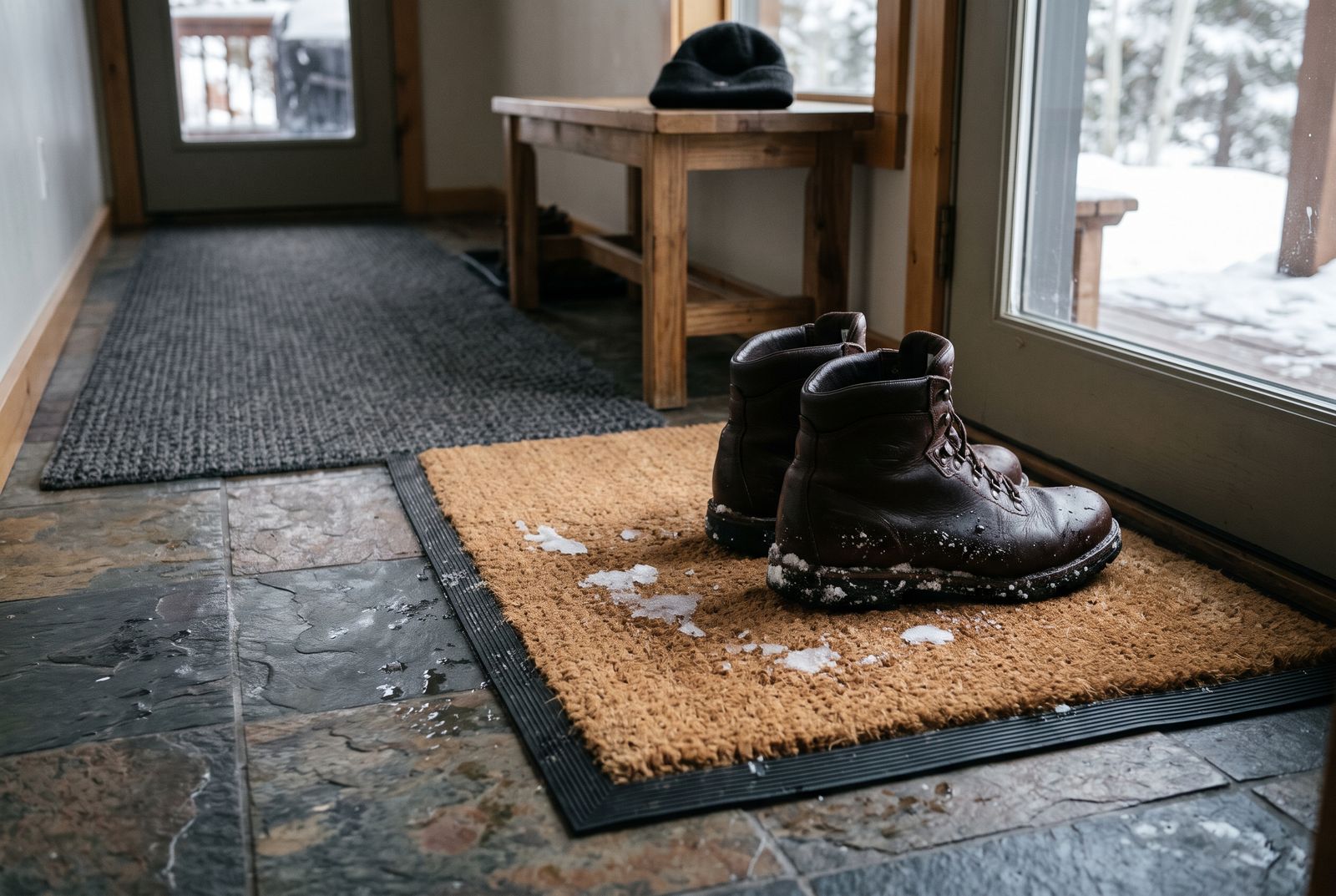
- Keep carpet out of the zone between the door and the gear storage. Hard flooring or a mudroom there pays for itself.
- Consider carpet tile in lofts, bunk rooms and basements. A stained tile can be swapped out in minutes; buy spare tiles from the same dye lot on day one.
- Leave clear spot-cleaning instructions and a kit for cleaners between stays. Our care guide covers the basics.
Getting carpet up the hill
Logistics are part of the job in the high country, and they are worth discussing before you schedule.
- Rolls are long and heavy. Ask whether the delivery vehicle can reach the house in winter, and where it will park on a narrow road.
- Condo buildings often have HOA rules on work hours, elevator reservations and protecting common hallways. Get them in writing for the crew.
- Measurement usually needs a visit, so plan around weather and road conditions.
- If the home is occupied only part-time, arrange who will be there to open up, run the heat beforehand, and do the final walk-through.
If this, then that
- the house has radiant floor heatget the R-value limit first, then pick a carpet and pad that fit under it.
- the living room is all glass to the southsolution-dyed fiber plus window film or shades.
- it is a nightly rentalresilient nylon or triexta, carpet tile in bunk rooms, hard flooring at the entry.
- the home sits empty for weeksadd leak sensors or a shutoff valve before you spend on carpet.
The bottom line
- Sun, radiant heat and water are the mountain-specific risks; plan for each.
- Treat rentals as commercial-level traffic and design the entry around it.
- Sort out access and HOA rules before install day, not on it.
- See how boots and deicer reach the carpet in our entryway guide.
Carpet for a mountain property?
Tell us the town, the rooms, how the place is used, and anything about access or HOA rules.