

Vacuuming is the maintenance that matters most
Dry soil is abrasive. Every step grinds it against the fiber. Vacuuming removes it before it can do that, which makes it the cheapest thing you can do for carpet.
How often depends on traffic. A guest room might need a weekly pass. Entry paths, hallways and the spot in front of the sofa need it every day or two in winter, when grit and deicer are coming in. Slow passes work better than fast ones; the vacuum needs time to lift soil from the base of the pile. Go over high-traffic lanes in two directions.
- Set the vacuum height for your pile. Too low drags and wears the fiber; too high leaves soil behind.
- Use the brush roll setting the carpet maker recommends. Wool and loop pile usually call for a gentle or suction-only setting.
- Empty the bin or change the bag before it is full. Suction drops off fast as it fills.
- Change HVAC filters on schedule. Fine dust that settles on carpet often comes through the vents.
Spot cleaning without spreading the stain
Speed matters, but technique matters more. Most permanent stains are made worse by the first attempt to remove them.
- the spill is liquidblot with white towels until nothing transfers, then rinse with a little plain water and blot again.
- it is a solid or pastelift it with a spoon or dull knife first, scraping toward the center.
- it is mud or dirtlet it dry completely, then break up and vacuum.
- it is wax or gumharden it with ice and chip it off before anything else.
- a stain survives one careful attemptstop and call a cleaner before repeated chemicals set it.
Household cleaners with bleach, strong alkalis or optical brighteners can permanently discolor carpet. Use a spotter labeled for carpet and check that it is safe for your fiber, especially wool.
Deep cleaning: method, timing and warranty
Hot water extraction is the deep-cleaning method most carpet makers recommend. A cleaning solution is sprayed into the pile and pulled back out under strong suction, along with the soil it loosened. Done well, very little moisture is left behind.
Many residential carpet warranties include a cleaning requirement, often professional extraction every 12 to 24 months, and ask you to keep proof. Read the terms for your product. The time to find out is before you need to file a claim.
| Method | Good for | Keep in mind |
|---|---|---|
| Professional hot water extraction | Periodic deep cleaning; usually what warranties expect | Ask about drying time and pre-vacuuming |
| Rental or home extractor | Spot areas and maintenance | Less suction; use less solution and extra dry passes |
| Low-moisture methods | Quick refresh between deep cleans | May not meet warranty cleaning terms on their own |
Living with dry air: the upside and the catch
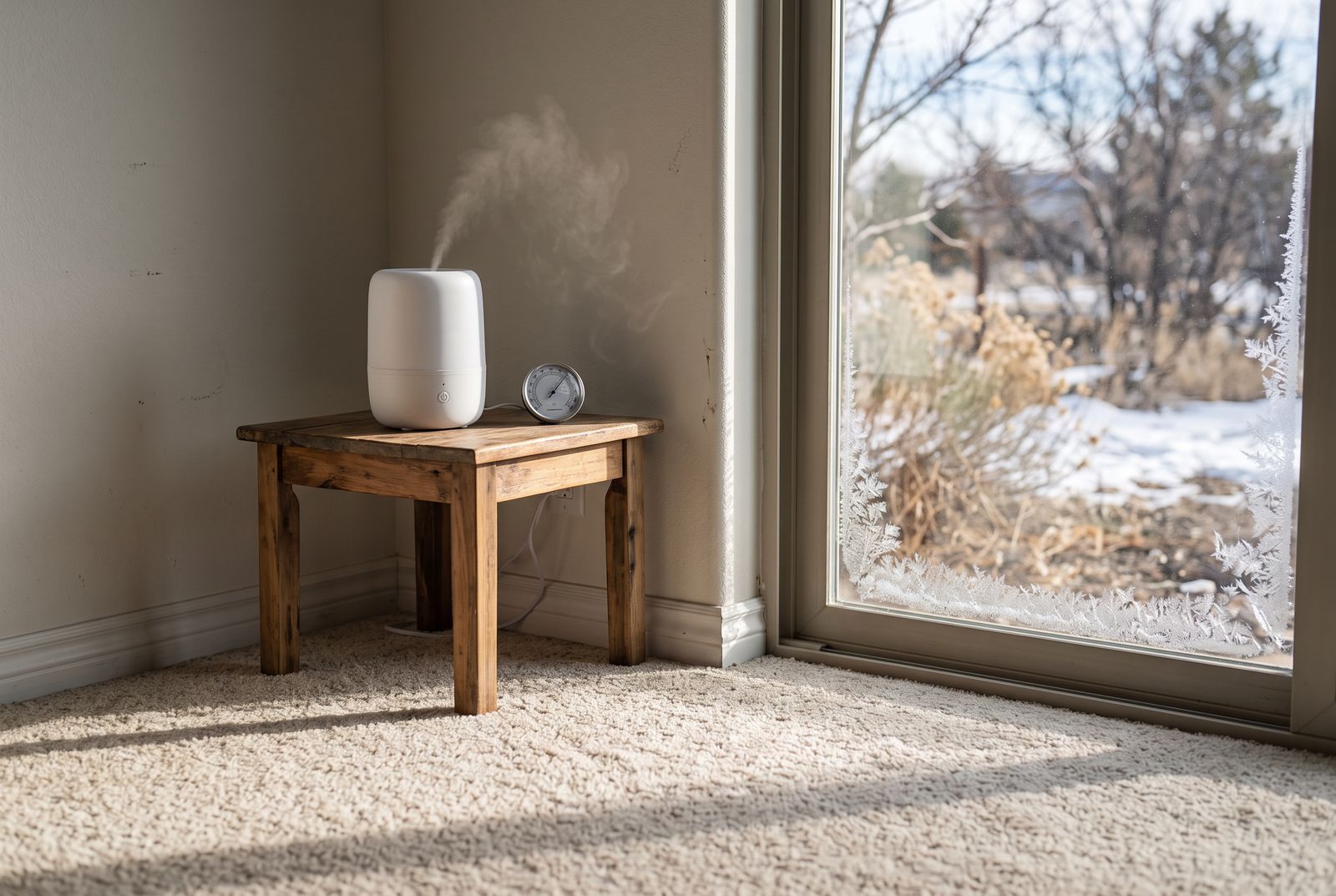
Colorado's low humidity has one real benefit for carpet owners: a properly cleaned carpet dries faster here than in a humid climate, which lowers the risk of mildew or wicking. The catch is static, dust and the fine grit that rides in on wind. A humidifier running at the low end of the healthy range, regular vacuuming, and good HVAC filters handle most of it. The static and dry air guide covers humidity targets in detail.
A year of carpet care, season by season
| Season | Focus |
|---|---|
| Late fall | Put out entry mats, set up a boot tray, change HVAC filters, start the humidifier |
| Winter | Vacuum entry paths often; treat deicer haze with warm water; watch humidity and window condensation |
| Spring mud season | Let mud dry before vacuuming; shake out and wash mats; good time for a deep clean |
| Summer | Close shades on sunny rooms; rotate furniture slightly; ventilate after any smoke days |
Searchable carpet care answers
Should I scrub a fresh spill?
No. Blot with a clean white cloth, working from the outside edge toward the center. Scrubbing untwists the yarn tips and leaves a fuzzy patch even after the stain is gone.
Hot or cold water for spots?
Start with cool or lukewarm water. Hot water can set protein stains such as blood, milk or egg.
What about red wine or coffee?
Blot up as much as you can right away, then use a carpet spotter approved for your fiber. Polyester and triexta often release these stains more easily than untreated nylon or wool. If a stain remains after one careful attempt, call a cleaner before it is set by repeated heat or chemicals.
How often should carpet be deep cleaned?
It depends on traffic, pets and the carpet maker's guidance. Many residential warranties ask for periodic professional hot water extraction, often somewhere between every 12 and 24 months. Read the warranty for your product and keep receipts.
Steam cleaning or dry cleaning?
What most people call steam cleaning is hot water extraction, and it is the method most carpet makers recommend. Low-moisture methods have their place for maintenance between deep cleanings. Check what your warranty allows.
Can I rent a machine instead of hiring a pro?
You can for maintenance. Rental machines usually have less suction than truck-mounted units, so use less solution, make extra dry passes, and run fans until the carpet is fully dry.
How do I handle pet accidents?
Blot up the liquid, rinse with plain water and blot again, then use an enzyme cleaner made for pet urine and approved for carpet. Old accidents often reach the pad and subfloor, which surface cleaning cannot fix.
Why does my vacuum not pick up dog hair?
Hair weaves into cut pile. Slow, overlapping passes in two directions help, and a rubber carpet rake loosens it before you vacuum.
Does carpet dry faster in Colorado?
Generally yes. Low humidity speeds evaporation, so a properly extracted carpet often dries faster here than in a humid climate. Keep air moving and the heat on in winter so it does not stay cold and damp.
How do I get wildfire smoke out of carpet?
Vacuum with a HEPA-filtered vacuum to lift fine particles, ventilate when the outdoor air is clear, and schedule a professional cleaning if the odor stays. Replace HVAC filters too, or the smell will return through the vents.
Do I need a special vacuum for wool or loop carpet?
Use a vacuum with an adjustable or switchable brush roll. A stiff, fast beater bar can fuzz wool and loop pile. The Carpet and Rug Institute runs a Seal of Approval program for vacuums that you can check.
No answers match that search. Try a shorter word, or ask us directly.
The bottom line
- Vacuum slowly and often, especially near doors in winter.
- Blot, never scrub, and stop after one careful attempt on a tough stain.
- Deep clean on the schedule your warranty asks for, with a clear-water rinse.
- When carpet is past saving, our buying guide helps you choose better next time.
Thinking it might be time to replace?
Tell us what the carpet is doing, where, and how old it is. Replies come by email.