
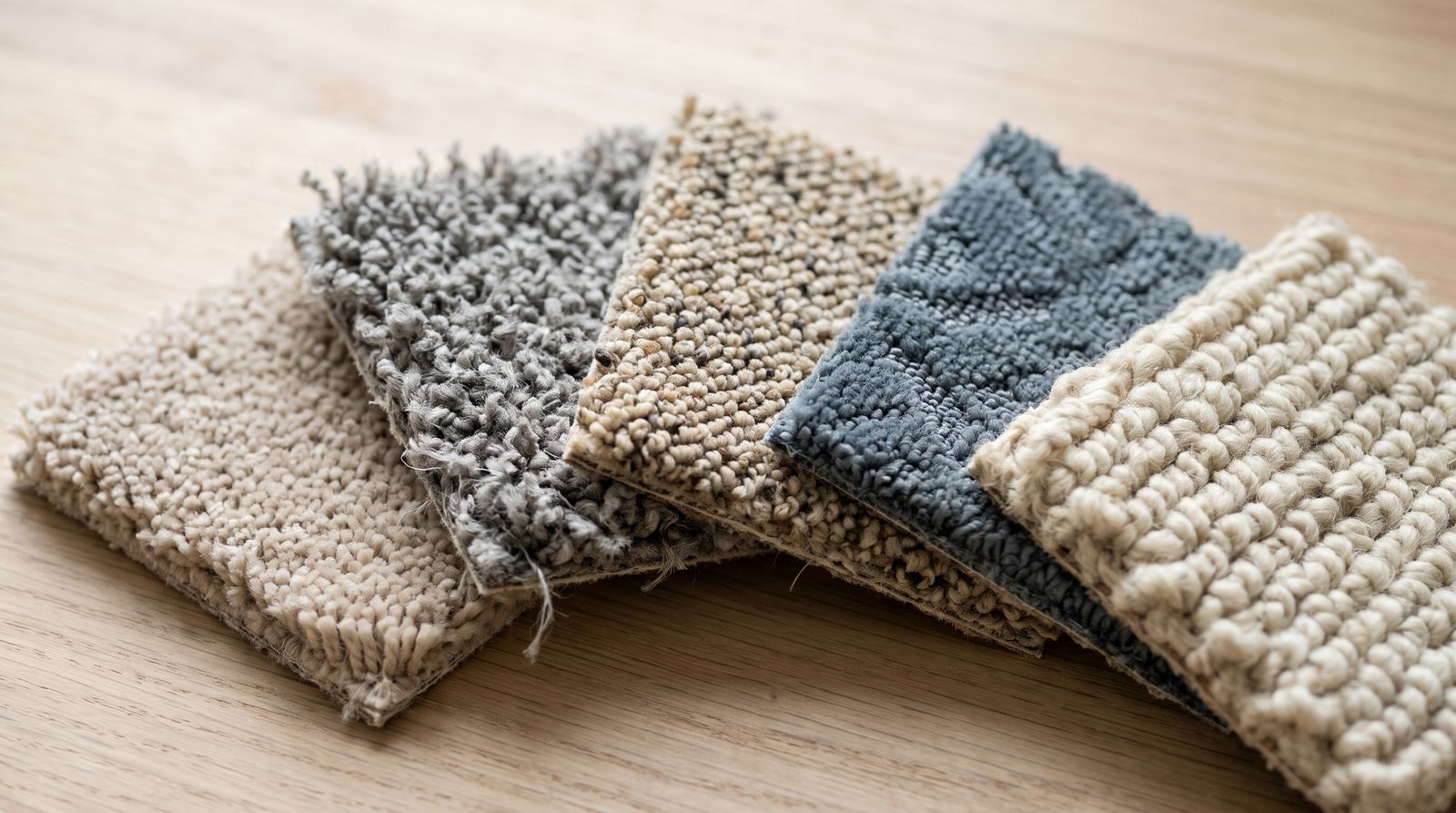
Start with the room, not the sample board
Most people pick carpet by touch and color. Both matter, but neither tells you how the carpet will look in five years. The room does.
Before you open a sample book, write down three things for each space: how much foot traffic it gets (a guest bedroom and a hallway are different planets), who walks on it (pets, kids, adults in socks, adults in boots), and how much direct sun hits the floor. In Colorado, add a fourth: how close the room sits to an exterior door. Grit and deicer travel farther into a house than you would think.
With those answers in hand, the fiber choice narrows fast. Our fiber matchmaker runs the same logic in four clicks if you want a quick starting point.
The five carpet fibers, compared honestly
Almost every residential carpet sold today is made from one of five fibers. Brand names and trademarked versions vary, but the underlying polymer tells you most of what you need to know.
| Fiber | Strength | Weak spot | Best Colorado fit |
|---|---|---|---|
| Nylon | Best resilience of the synthetics; recovers from crushing | Needs applied stain protection; surface-dyed versions can fade | Stairs, halls, family rooms, rentals |
| Triexta (PTT) | Soft, with stain resistance built into the fiber | Less proven over decades than nylon in heavy traffic | Homes with kids and pets |
| Polyester (PET) | Rich color, soft hand, resists many water-based stains | Mats and crushes sooner; attracts oily soil | Bedrooms and low-traffic rooms |
| Wool | Natural, resilient, naturally flame resistant | Higher cost; sensitive to some cleaners; can fade | Living spaces where feel matters most |
| Olefin | Absorbs almost no water; resists fading | Crushes easily; holds oily soil; can mark from friction | Basements, sunny low-traffic rooms |
If you only remember one line from this table: nylon is the default for traffic, polyester is the default for softness on a budget, and triexta sits between them. Wool is a lifestyle choice as much as a performance one.
Pile construction changes the look more than the fiber does
The same nylon can be tufted into a soft plush or a tough little loop. Construction decides whether you see footprints, whether grit hides, and whether a cat can pull a thread.
Cut pile (saxony, plush, textured)
Loops are cut so each tuft stands up as two yarn ends. Plush and saxony feel soft and look formal; textured cut pile has a slight kink in the yarn that hides footprints.
Frieze
Very tightly twisted cut yarns that curl over. Casual look, excellent at hiding dirt and traffic patterns. A good match for busy family rooms and stairs.
Loop pile (level loop, berber)
Yarn stays looped. Dense, low loops wear very well and suit basements and offices. Large, open loops can snag on pet claws or a dragged toy and run like a sweater.
Cut-and-loop
Cut tufts and loops at different heights create a pattern. Patterns hide soil well. Tight versions are pet-friendly; check that loops are short and dense.
Density, twist and face weight: the numbers that predict wear
Spec sheets list a handful of numbers. Three of them are worth your attention.
Face weight
Ounces of yarn per square yard, measured above the backing. Salespeople love it because bigger sounds better. On its own it can mislead: a tall, loose pile can have a high face weight and still crush flat in a hallway.
Density
Density tells you how tightly the yarn is packed. Where a sheet does not list it, you can estimate average density from two numbers it usually does list: face weight in ounces multiplied by 36, divided by pile height in inches. A 40-ounce carpet with a half-inch pile works out to 2,880. Higher density generally means better crush resistance.
Twist
Twists per inch in cut-pile yarn, often abbreviated TPI. Tighter twist holds the tuft together and helps it bounce back. Frieze styles sit at the high end. A soft plush with a low twist count will show wear patterns sooner, whatever the fiber.
Color, dye method and Colorado sun
There are two broad ways to color carpet yarn. Solution-dyed fiber has pigment added while the polymer is still liquid, so color runs through the whole strand like a carrot. Surface-dyed or piece-dyed yarn takes color on the outside, more like a radish. Ultraviolet light and harsh cleaners attack surface color first.
Because UV exposure rises with elevation, rooms with large south or west glass in Colorado take more fading load than the same room at sea level. If the floor sees hours of direct sun, ask specifically whether the product is solution-dyed. Polyester and olefin are commonly solution-dyed; nylon is available both ways, so do not assume.
Mid-tone, slightly flecked colors hide lint, pet hair and the fine dust that blows in on dry, windy days far better than solid light or solid dark carpet.
Choosing the pad: thinner and firmer usually wins
Pad (also called cushion or underlay) is the cheapest part of the job and the easiest place to make an expensive mistake. A thick, soft pad feels great for a month, then lets the carpet flex with every step. That flexing stresses the backing, loosens seams and causes ripples.
Carpet makers publish pad requirements for their products, typically a maximum thickness and a minimum density. Many residential lines land around 7/16 inch maximum thickness, and some ask for something firmer on stairs. Using a pad outside the spec can affect the product warranty, so ask your installer which pad they plan to use and compare it to the sheet.
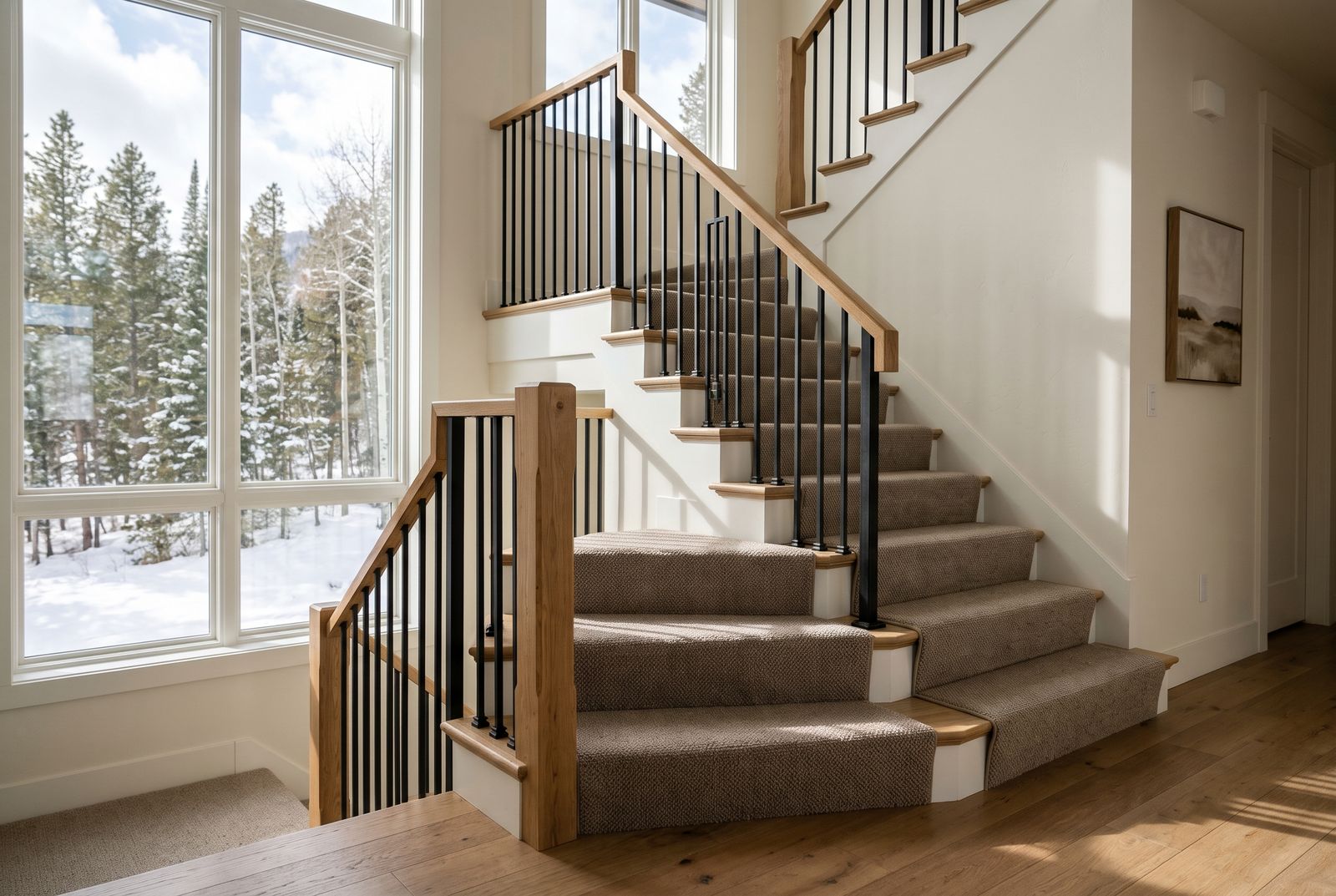
For basements on a concrete slab, a pad with an attached moisture barrier helps, but it does not fix a damp slab. Ask for a moisture check before carpet goes down.
Decision matrix: if this, then that
- the room is a staircase or main hallwaynylon in a frieze or dense textured cut pile, firm pad.
- a dog or cat lives in the housetriexta or nylon in cut pile; skip large open loops.
- the room gets hours of direct suna solution-dyed fiber in a mid-tone color, plus shades or film.
- it is a guest bedroom with light usepolyester is a sensible place to save money.
- the floor is a basement slabolefin or nylon loop over a moisture-barrier pad, after a moisture check.
- feel and natural fiber come firstwool, with a cleaning plan that uses wool-safe products.
The bottom line
- Choose fiber by traffic, construction by lifestyle, and color by sun and soil.
- Calculate density yourself; do not buy on face weight alone.
- Match the pad to the manufacturer's spec, not to how it feels in your hand.
- Then read our installation guide so the carpet you chose gets installed the way it was designed to be.
Narrowed it down?
Send the rooms and what you are leaning toward, and get a reply by email.